
Nepal Flash Flood 2026: Deadly Floods on Nepal-China Border, Death Toll, Rescue Operation and International Aid
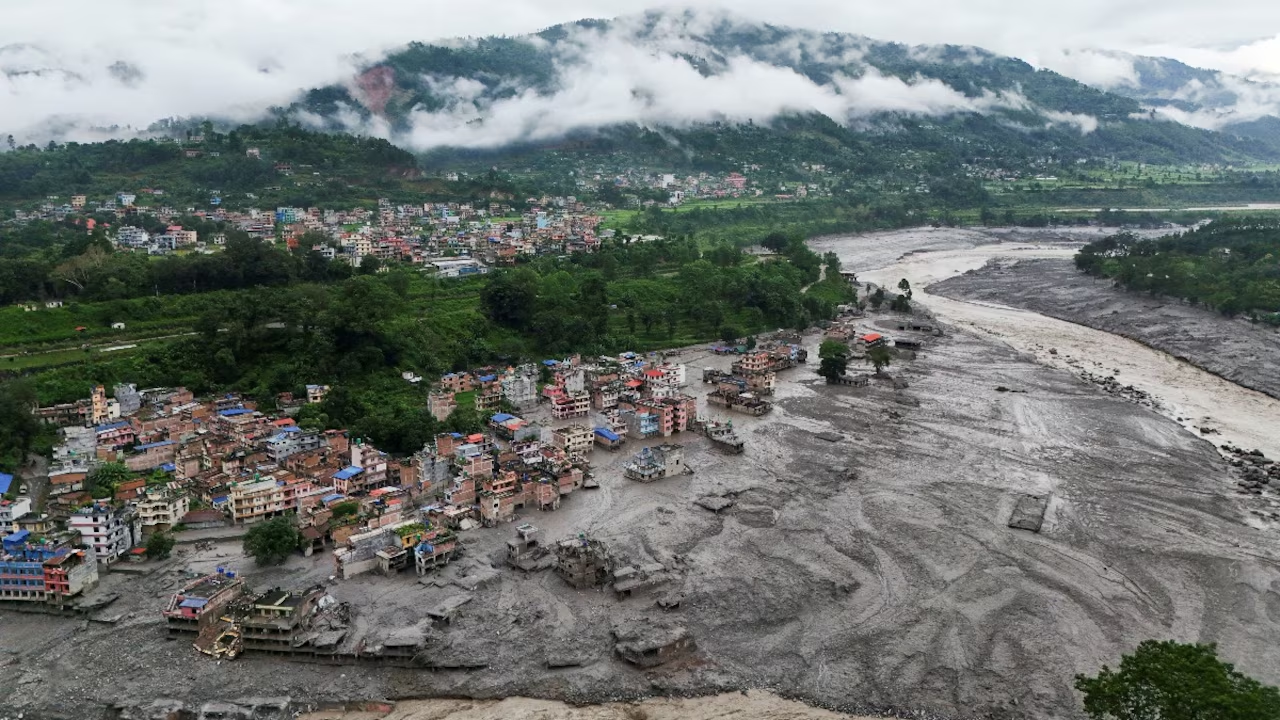
Nepal Flash Flood 2026: A catastrophic flash flood struck Nepal’s Himalayan border region with China on Wednesday, August 26, 2026, causing massive destruction across Nepal’s Rasuwa district and neighbouring Tibet. The disaster swept away homes, roads, bridges, vehicles, hydropower infrastructure and border facilities, while hundreds of people were killed and many more remain missing.
The disaster occurred in one of the most remote and geographically difficult regions of the Himalayas, near the Rasuwagadhi–Gyirong border crossing between Nepal and China’s Tibet Autonomous Region.
According to the latest reports available on August 28, the combined death toll in Nepal and Tibet has risen to more than 570, while nearly 2,000 people are still reported missing. More than 3,700 people have been rescued in Nepal, and thousands of security personnel remain involved in search-and-rescue operations. The figures are still changing as rescuers reach previously inaccessible areas and identify victims.
Nepal Flash Flood 2026: When Did the Flood Happen?
The catastrophic flash flood struck on August 26, 2026.
The worst-hit area was Rasuwa district in northern Nepal, particularly around Timure and Rasuwagadhi, close to the Nepal-China border. On the Chinese side, the Gyirong (Kerung) area of Tibet was also severely affected.
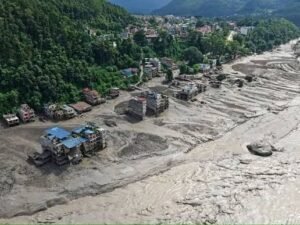
The flood moved rapidly through the mountain valleys, carrying huge quantities of water, mud, rocks, ice and debris. The sudden nature of the event left residents, workers and travellers with very little time to escape.
The International Federation of Red Cross and Red Crescent Societies reported that a major flash flood struck Rasuwa district on August 26.
Where Did the Nepal-China Border Flood Occur?
The disaster centred on the Bhotekoshi River system and its tributaries in Nepal’s Rasuwa district.
One of the most severely affected locations was Rasuwagadhi, a major border point connecting Nepal with China’s Tibet Autonomous Region. Across the border is the Gyirong Port, an important trade and travel route between the two countries.
The flood devastated the border infrastructure, including roads, bridges and border facilities. The destruction has also severely disrupted transportation and access to the region.
The disaster therefore affected not only local communities but also tourists, pilgrims, transport workers, hydropower workers and people travelling between Nepal and Tibet.
What Caused the Massive Flash Flood?
Initial reports suggested that the disaster was linked to an extreme event high in the Himalayas.
Investigations and expert assessments indicate that a glacier collapse or ice-and-rock avalanche triggered the chain of events. The collapsing mass entered the Lhende Khola, causing a tremendous surge of water, mud and debris downstream.
The event is sometimes described as a possible glacial lake outburst flood (GLOF)-type disaster, although the exact sequence of the glacier collapse, temporary blockage and subsequent flooding is still being investigated.
A huge amount of ice and rock entered the river system and created an exceptionally destructive debris flow.
Reuters reported that the glacier collapse sent an avalanche of rock and ice into the Lhende Khola, producing high-speed mudslides that devastated settlements and infrastructure.
Why Was the Flood So Destructive?
The Himalayan landscape made the disaster particularly dangerous.
The affected region contains:
- Steep mountain valleys
- Glaciers and unstable slopes
- Fast-flowing rivers
- Remote settlements
- Limited road access
- Hydropower projects
- International border infrastructure
When the huge volume of water, ice, mud and rocks suddenly moved downstream, the narrow valleys acted like natural channels, concentrating the destructive force.
Reports indicate that roads, bridges and hydropower facilities were destroyed or badly damaged. Some communities were effectively cut off from the outside world.
How Many People Have Died?
The death toll has continued to rise as rescue teams recover bodies from rivers, mud and collapsed structures.
As of August 28, 2026, reports indicate that the combined death toll in Nepal and Tibet has passed 570 people.
The Associated Press reported 579 deaths in Nepal, while China reported five deaths in Tibet. The same report said that nearly 2,000 people remained missing across the wider disaster zone.
However, different government agencies and media organisations have reported different numbers at different times because the rescue operation is still underway.
Important: The death toll should therefore be treated as provisional and updated when official authorities release new figures.
How Many People Have Been Rescued?
Rescue operations have already saved thousands of people.
According to the latest Associated Press report, more than 3,700 people have been rescued in Nepal. Thousands of Nepal Police, Nepali Army and Armed Police Force personnel have been deployed throughout the affected areas.
Earlier reports from Nepal’s disaster authorities showed thousands of security personnel involved in search and rescue operations, with helicopters and drones being used to reach isolated areas.
The number of rescued people is expected to change as operations continue.
Is the Rescue Operation Still Going On?
Yes. Search, rescue and recovery operations are still ongoing.
The operation has been extremely difficult because many affected areas are mountainous and some roads and bridges have disappeared.
Nepal’s security forces are using:
- Military helicopters
- Rescue helicopters
- Drones
- Excavators and heavy machinery
- Search teams
- Medical teams
- Police and military personnel
- Local volunteers
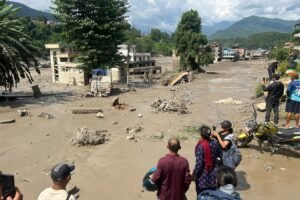
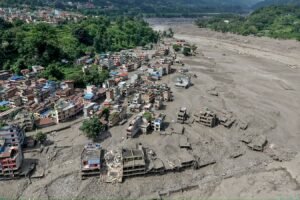
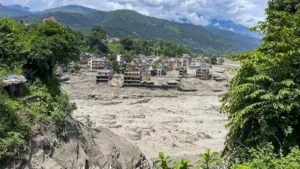
Rescuers are searching damaged buildings, riverbanks, debris fields and isolated settlements for survivors and missing people.
The Nepalese military has mobilised a very large force for the operation. Reports indicate that more than 14,000 security personnel have been deployed in the rescue effort, while other reports put the wider mobilisation even higher as the operation expands.
Why Is the Rescue Operation So Difficult?
The biggest challenges include:
1. Destroyed Roads and Bridges
Many roads and bridges were swept away, making it difficult for rescue teams to reach affected communities.
2. Heavy Mud and Debris
Huge quantities of mud, rocks and other debris cover roads and buildings.
3. Unstable Mountain Slopes
Further landslides and avalanches remain a threat to rescuers.
4. Bad Weather
Rain and cloud cover can prevent helicopters from flying safely.
5. New Flood Risk
A lake formed by the disaster in the upstream area has created concerns about another possible flood if water levels rise or a natural barrier fails.
Chinese authorities temporarily suspended rescue activity because of concerns about the stability of an upstream lake and later resumed operations after aerial surveys and modelling indicated that the immediate risk had become more manageable.
Which Countries Are Helping Nepal?
The scale of the disaster has attracted international attention, with several countries offering humanitarian assistance, rescue support and financial aid.
India
India has offered assistance and has provided relief supplies. Reports say India provided 50 metric tonnes of relief material following the disaster.
Indian authorities have also been monitoring potential downstream flood risks because rivers from Nepal eventually flow into northern India.
China
China has been directly affected because the disaster also struck Tibet.
Chinese authorities have deployed professional rescue personnel and equipment around the affected border region. China is also monitoring the unstable terrain and newly formed lake.
South Korea
South Korea has offered assistance after several South Korean nationals were reported missing or stranded.
South Korea has also pledged $1 million in humanitarian assistance and sent a response team, although Nepal has indicated that foreign search-and-rescue teams are not currently required.
United Kingdom
The UK has pledged £5 million in assistance and offered emergency response support.
United States
The United States has committed approximately $500,000 in assistance and offered disaster-response expertise.
European Union
The European Union has also been involved in the international humanitarian response.
Australia
Australia has mobilised crisis and humanitarian experts and pledged A$5 million in assistance after dozens of Australians were reported missing.
United Nations and International Organisations
UN agencies and humanitarian organisations, including UNICEF and WHO, are supporting the response.
The International Federation of Red Cross and Red Crescent Societies has also been involved in providing emergency assistance.
Nepal Declines Foreign Search-and-Rescue Teams
One important development following the disaster is Nepal’s decision regarding foreign rescue teams.
Despite offers from several countries, Nepal’s Foreign Ministry said on August 28 that the country currently does not require foreign assistance for search-and-rescue operations.
Nepal is relying primarily on its own security forces to conduct rescue operations, while remaining open to humanitarian and technical assistance.
Countries including India, China, South Korea, the United States, the United Kingdom, Japan, Sri Lanka and Bangladesh have offered various forms of support.
This does not mean Nepal has rejected international humanitarian assistance altogether. Financial support, relief supplies and other forms of assistance can still support the country’s recovery.
Foreign Tourists and Pilgrims Among the Missing
One of the most heartbreaking aspects of the disaster is the large number of foreign nationals who were travelling in the region.
People from more than 30 countries have been reported missing, including tourists, workers and pilgrims.
Reported missing nationals include people from:
- India
- China
- United States
- Australia
- United Kingdom
- South Korea
- Malaysia
- Ukraine
- Canada
- Singapore
- Germany
- Russia
- Other European countries
The Guardian reported that more than 1,500 people were missing in the wider disaster, with hundreds of foreign nationals among them.
India has been particularly affected, with hundreds of Indian nationals reported missing in the aftermath.
Because communication and transportation systems were damaged, confirming the whereabouts of foreign nationals has been difficult.
What Happened at Rasuwagadhi?
Rasuwagadhi became one of the most recognisable locations associated with the disaster.
The area is an important Nepal-China border crossing and contains customs, immigration, transport and trade infrastructure.
When the massive flood and debris flow reached the area, buildings, vehicles and infrastructure were overwhelmed.
Across the border, the Chinese side around Gyirong Port was also badly affected.
The destruction of the border infrastructure has disrupted an important connection between Nepal and Tibet.
Impact on Nepal’s Hydropower and Infrastructure
The flood also caused extensive damage to infrastructure.
Hydropower projects in the region were affected, while roads and bridges were destroyed.
The loss of bridges is particularly significant because mountainous communities depend on a limited number of crossings to access hospitals, markets and emergency services.
The destruction of infrastructure means that even after the water recedes, recovery will take considerable time.
Humanitarian Crisis After the Flood
The disaster has created a major humanitarian emergency.
The International Red Cross estimates that approximately 93,000 people may need humanitarian assistance.
Children are also among those affected. UNICEF has reported that around 17,000 children urgently need assistance, while schools have been destroyed or damaged.
People affected by the disaster need:
- Food
- Clean drinking water
- Temporary shelter
- Medicines
- Medical treatment
- Clothing
- Sanitation facilities
- Psychological support
- Safe transportation
- Communication facilities
Could Another Flood Happen?
Authorities remain concerned about additional flooding.
A new lake has formed in the upstream region as a result of the glacier collapse and debris blockage.
If the lake grows rapidly or the natural barrier fails, a new surge of water could travel downstream.
Chinese and Nepalese authorities are therefore monitoring the situation closely.
The risk is particularly concerning because the terrain remains unstable and rainfall could increase water levels.
Is Climate Change Connected to the Disaster?
Scientists and experts are increasingly concerned about the impact of a warming climate on the Himalayan region.
The Himalayas are experiencing rapid changes in glaciers, snow and frozen terrain. As temperatures rise, glaciers can become unstable and glacial lakes can grow.
However, it is important not to claim that climate change alone directly caused this specific flood.
The exact geological and hydrological sequence behind the August 26 disaster is still being investigated.
What is clear is that glacier instability, extreme rainfall, steep Himalayan terrain and rapidly changing mountain conditions can combine to create dangerous flood and landslide risks.
Nepal Flash Flood 2026: A Disaster Along an International Border
The August 26 disaster is more than a local flood.
It affected an international border between Nepal and China, disrupted international travel, affected foreign tourists and pilgrims, damaged major infrastructure and triggered a large international humanitarian response.
The disaster also demonstrates how vulnerable Himalayan communities and infrastructure can be to sudden natural hazards.
Nepal Flash Flood 2026: Key Facts
| Information | Latest Reported Details |
|---|---|
| Date of disaster | August 26, 2026 |
| Main affected country | Nepal |
| Main affected district | Rasuwa |
| Major location | Rasuwagadhi / Timure |
| Border | Nepal-China / Tibet |
| Major river system | Bhotekoshi and connected tributaries |
| Chinese affected area | Gyirong, Tibet |
| Likely trigger | Glacier collapse / ice-rock avalanche and resulting flood/debris flow |
| Deaths | More than 570 combined, according to latest reports |
| Missing | Nearly 2,000 across Nepal and Tibet |
| Rescued in Nepal | More than 3,700 |
| Rescue status | Ongoing |
| Major responders | Nepal Police, Nepali Army, Armed Police Force |
| International support | India, China, South Korea, UK, US, Australia, EU, UN and others |
The figures remain provisional because search-and-rescue teams are still working in remote areas.
Conclusion
The Nepal Flash Flood of August 26, 2026 has become one of the most devastating disasters to hit the Himalayan region in recent years.
The flood began near the Nepal-China border after a major glacier-related collapse and rapidly transformed mountain rivers into torrents of water, mud, ice and rock.
Rasuwa district, Rasuwagadhi and nearby settlements suffered catastrophic destruction, while the disaster also crossed the border into Tibet and severely damaged the Gyirong area.
Hundreds of people have lost their lives, thousands remain missing and thousands of survivors have already been rescued. Nepal’s security forces continue to search for survivors and recover victims despite extremely difficult terrain.
The international community has offered financial assistance, relief supplies, technical support and rescue expertise. However, Nepal has said that its own security agencies are currently capable of managing the search-and-rescue operation.
As rescue operations continue, authorities are also watching for the possibility of further flooding from unstable lakes and debris-blocked waterways.
The tragedy is a powerful reminder of the risks faced by people living and travelling in the rapidly changing Himalayan environment—and of the importance of early-warning systems, disaster preparedness and international cooperation in protecting lives.
This article should be updated regularly as Nepal’s government and disaster-management authorities release verified casualty, rescue and missing-person figures.